|
Our
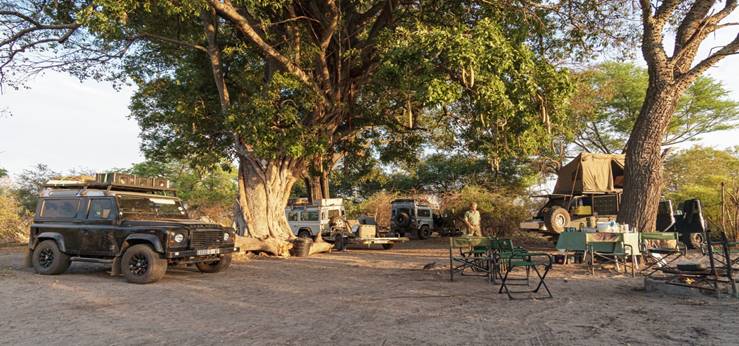
Camp on the banks of the Kwando River in the Caprivi
Greetings from Cape Town,
What a year 2020 has been, I am sure no one will ever forget
it. It has been very frustrating and
confusing for all, I never even got around to do my normal
newsletter, as we did not know what was
happening from one day to the other. So only
did a Christmas letter which I hope you managed to
receive and read, now I will try and remember
everything I was going to tell you.
On the 8th November
2019, I flew to Livingstone, Zambia to join a 4x4 group of visitors on this
amazing
Tour. I had done an overland trip
before, but it was on an overland bus with backpackers, years ago.
I arrived safely in Livingstone, which took
ages to get through customs although we were only a few
passengers.
I was collected by Casey, one of the crew
from our Tour, who took me around Livingstone looking for ice,
as it was an extremely hot day.
The
rest of the party had gone to look at the Victoria Falls and also have a
dip in the
Devils Pool. Our Camp for the night was
at CampNkwazi on the banks of the Zambezi River with
breathtaking over the water with
sightings of a variety of game, rich and rare birdlife with the like of
Fish
Eagle, African Fin Foot, Horn-Bill, African
Paradise Flycatcher to name but a few
Camp Nkwazi is located close to
the Mosi-Oa Tunya, Chobe, and Kafue National Parks, and
right opposite
the Zambezi National Park.
We had
lawn covered campsites, cleared in the forest with luxury ablution and
scullery facilities
will ensure that all campers return.
For the campers convenience, Camp Nkwazi offers
a restaurant, bar and swimming pool. It is
ideal for relaxing in the African bush with indescribable birdlife,
also to participate in the nearby activities
with the likes of helicopter or microlight flights, makoro or
boat
trips on the Zambezi, lion encounters, elephants,
and much more. Camp Nkwazi is a Destination.
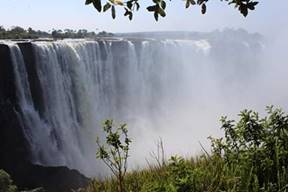 
Victoria
Falls
Camp Nkwazi
Our next night after quite a long
interesting drive was Camp Kwando a popular stopover set
on the River
Kwando, which is situated 25km south
of the village of Kongola, and approximately 125km west of
KatimaMulilo and 400km
from Rundu. The main building consists of a large thatched Lapa,
decorated with
African artifacts, where you can
relax and unwind in the spacious lounge on the comfortable leather sofas.
The open-sided dining area overlooks
the river and crocs and hippo can often be seen. Solar power
provides 24/7 electricity, so helps to
charge your mobile.
Lovely outdoor relaxing zone plus
swimming pool and sun-shades and umbrellas for those hot days
Evening dinner is a 3-course meal
consisting of a game and fresh vegetables, grown in their garden.
A wonderful stopover for us.
After a hearty buffet breakfast
at Camp Kwando, we traveled further on to Rundu making
our way to
Taranga Safari Lodge along
the Okavango River, a first-class destination for boating, birding, and
fishing.
The
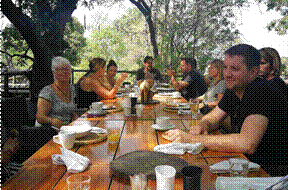
group at Kwando
Breakfast
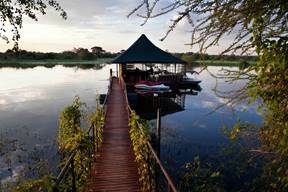
Taranga floating Bar
The lodge is intimate
with only four open-fronted luxury riverbank chalets situated among tall
riverine
trees. Guests are offered ample
opportunities to take in the sights and sounds of the African bush with
views across the river into the nearby
flood plains and lily-covered wetlands.
Everything at the lodge focuses on
relaxation and enjoying the African wilderness at your own pace. The
large wooden decks offer a private and
idyllic location for those wishing to unwind. We found a lovely
swimming pool at the main deck to keep
everyone cool or allowed us to just relax and enjoy the African
sun. Taranga Safari boasts an
international style restaurant with three-course dinners and a floating
river bar.
They offer various types of accommodation, such as Deluxe Luxury, Classic
Luxury Chalets, and wonderful
shaded campsite covered again with a
lovely lawn which was very welcome.
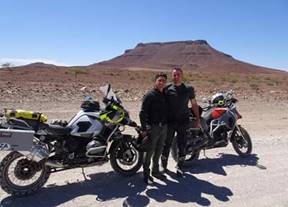 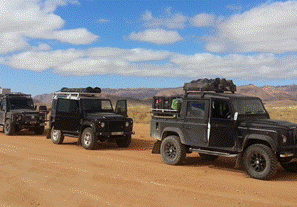
Two
of the
bikers
Three of our 4 vehicles
Our Party consisted of 6 South African, 1
lady from Bulgaria, 5 people from the UK and, a couple from
Germany. We had 4 men and 1 girl
riding on their bikes and the rest of us in the vehicles. Much fun
and
laughter was had by everyone on the tour.
After
having a lovely breakfast at Taranga Camp we set off
towards Grootfontein to get us to Etosha
Where
we were going to spend some time
at Halali Camp. Halali is halfway
between Okaukuejo and
Namutoni which are the three camps
based in Etosha. German soldiers enjoyed hunting here before
Governor
Von Lindequist wisely declared the Etosha region a Game
Park and Reserve. “Halali” means
the sound of the horn which signals the
end of a day’s hunting. Halali is at the base of a dolomite
hill, under the shade of Mopane trees.
The camp has two entry gates and has a floodlit waterhole
with raised seating for excellent game
sightings. This provides exceptional wildlife viewing throughout
the day and the night, many beautiful
sunset photographs are taken there. Elephants, black rhino,
spotted hyena and lions are regular
visitors, and if you are lucky you will also see the resident leopard
coming for his morning drink every day,
at the Moringa waterhole. After a lovely evening rest at this
highly recommended camp, with lovely
amenities provided for the camper or at their accommodation
chalets, we set off
for Palmwag Campsite accommodation.
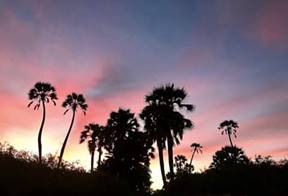 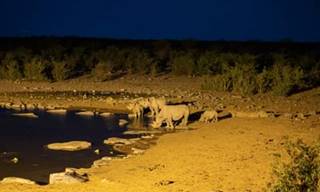
Sunset
at Halali
Halali waterhole
at night
After traveling nearly
250 kilometers we arrived at Kamanjab, a small town where
we refueled the bikes
and vehicles and bought cold cool
drinks after a dusty drive. We still had about another
115 kilometers to
travel before coming to Palmwag. Palmwag is
ideal for the nature-lovers, the campsite comprises thirteen
spacious camping sites, each with a
power-point, light, washbasin, and fireplace. We were in nature, while
having all the luxuries of civilization at
your fingertips remains one of the finest experiences on the planet.
At Palmwag we had many
choices, to partake in the many activities in the wildlife-rich
Concession, or take
a dip in the swimming pool or have a bite to
eat at their pool bar, or just soak up the Kaokoveld peace.
Nearby elephants have been known to venture
through the lodge grounds and campsite at night, so we
had to keep our eyes open for our pachyderm
friends
We also happen to come across quite a large group
of Ovahimba ladies and their children at the entrance
of Palmwag selling some
crafts. The first settlements of
the Himba people can be traced back to the
early 16th century when they crossed the Angolan border and
chose Kaokoland (nowadays called
Kunene region)
as their new homeland.
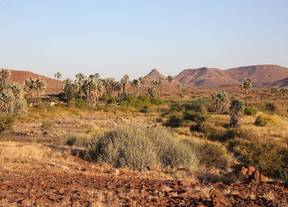 ![Himba Culture: Meet the African tribe that offers sex to guests [ARTICLE] - Pulse Nigeria](Untitled_files/image012.jpg)
Palmwag Lodge
area Ovahimba ladies
After driving
over 300km, taking many photographs of this vast region, we arrived at the
world’s largest
Ship Cemetary. Two of our bikers
had traveled up to Move Bay and spent the night at the Shipwreck
Lodge.
They
were collected midway by 4x4 as the sand was too thick for the bikes, then
drove the next 45km by
closed 4x4 vehicle. What an
amazing experience they had, and loved every minute. Many years ago this
entire coast was known as the Skeleton
Coast. Today the Skeleton Coast is a 40km wide and 500km long
coastal stretch in Namibia, a hostile but
fascinating area. It is notorious for its treaterous weather,
rough
surf, and shifting shores. Live in this
seemingly stark desert, life flourishes, elephants, lions, brown hyenas,
birds, and other desert-adapted wildlife,
call it their home. Numerous ships have stranded at the Skeleton
Coast thanks to the thick fog, the
unpredictable currents and stormy winds. The sailors who were able to
make it to the land did not stand a chance of
survival at this inhospitable coast and died of thirst. Some
local plants are incredibly adapted to the
rainless area of the Skeleton Coast and depend solely on the
daily fog from the Atlantic Ocean.
The Welwitschias, !Nara melons, and
several lithops succulent plants
(called ‘living stones’) survive.
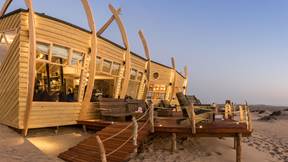 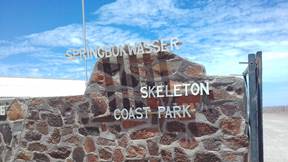
Sheleton Lodge
at Mowe Bay
Skeleton Coast Park
Another few 100km further we had
a stopoverat the Cape Cross Lodge, Skeleton Coast
where we camped
for
the evening in a very neat and comfortable campsite. A few metres from the
Atlantic Ocean, it is
a unique and serene
stopover for travelers along this vast untamed explored
wilderness on the Skeleton
Coast. The Lodge is situated about
60km north of Henties Bay and 120km from Swakopmund, which
will
be our next stop. Houses in
the area are a mixture of Cape Dutch and West Coast village
architecture,
with very large widows which
embraces the natural light and endless vistas. Around this idyllic
oasis lies
the infinite ocean and desert
littered with the eerie remains of man’s past endeavours. Nearby,
rocky out
crops provide a perfect
playground for a large colony of Cape Fur Seals, that we visited the
following
morning. Our facilities
were one of the best we have had on our trip so far.
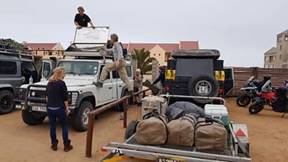 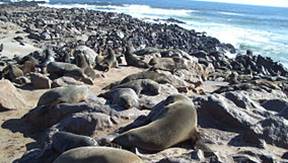
Getting
ready to leave
The Seal Colony
After visiting the seals we are now on our way to see Swakopmund,
which is the biggest and oldest
town in this region. Swakopmund is
a beach resort and an example of German colonial architecture.
Swakopmund was founded
in 1892 as the main harbour for German South-West Africa, and a sizable
part of its population is
still German. The town has 42,000 inhabitants and covers 193 square
kilometres
(75 sq.m of
land.) The city is situated in the Namib
Desert. Swakopmund has many salt roads, although
some have now changed to
tar lately. The Nama name was changed from ''Swachaub' with the
proclamation
of Swakopmund in 1896).
Many of the businesses in town are still run by German-speaking people and
Afrikaans is also widely
spoken especially by the Nama
population. Most Guest Houses and Hotels speak both English, and
Afrikaans, and even
German. It is like stepping back into another world which we are not
used to, as
the architecture is so
beautiful, old-worldly, and with typical German designs. A must visit if
ever you go
to Namibia. We spent the
night at Alte Brucke that had the most fabulous
campsite where each tent had
its ablution facilities and
kitchen.
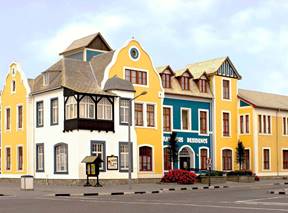 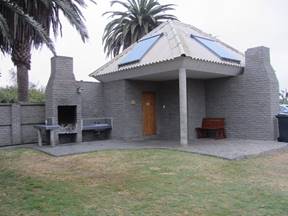
A Colonial German
Building
Alte Brucke Campsite
We now still have a few more towns and interesting places to
visit which I will recall in my next No.47
Newsletter, this will be emailed
to you during April - May. I sincerely hope that this was not too
long to
read. The rest of our Tour will take us
to Luderitz, Kolmanskop, Sossusvlei, and many other places
to tell
you
about
During
the lockdown, I have managed to enlarge my network on our Facebook Pages
and made many
new online friends in tourism.
We
have reached level 1 here in South Africa, so hope that you have all
managed to keep your
businesses, or establishments alive. A tour operator and I are busy
putting tours together for our
local South Africans so that they can travel
here and possibly travel to Namibia, be it by 4 x 4, a
self-drive, or with one of our Tour
Operators in a Quantum.
I
started doing Blogs during the lockdown, and am sending you the link should
you be interested in
read them from time to time. Blog
Link: https://ctcmarketing.co.za/blog
We wish you a Happy Easter, have an
awesome holiday stay safe and well.
Warm Regards and God
Bless,

|