




History of the people who occupied the Cape Of Good Hope Castle.
Monday, 21 February 1803 – On this day, 216 years ago, Britain returns the Cape to the Netherlands and the flag of the Batavian Republic is hoisted on the Castle
In terms of the Treaty of Amiens, signed in 1802 (between England and France), the British officially returned the Cape Colony to the Netherlands on 21 February 1803. It was then renamed the Batavian Republic and the flag of the Batavian Republic was hoisted on the Castle.
The Dutch only governed for three years (1803-1806), but their enlightened administration of the Cape was a great improvement upon the rule of the Dutch East India Company, which had lasted from 1652 to 1795. Commissioner-General J.A. de Mist and the Governor of the Cape of Good Hope, Lieutenant-General J.W. Janssens, sponsored development and reforms.
This is where the Afrikaans saying “Die Kaap is weer Hollands” comes from. In short, the colonial history of the Cape of Good Hope from its first occupation in 1652 is as follows:
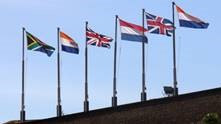
Dutch rule in the cape colony 1652 - 1795
British occupation 1795 - 1803
Return to Dutch rule 1803 - 1806
Second British occupation 1806
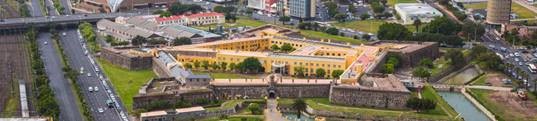
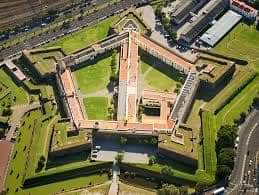
The Castle of Good Hope is the oldest existing colonial building in South Africa. It replaced an older fort called the Fort de Goede Hoop which was constructed from clay and timber and built by Jan van Riebeeck, the first Commander of the Cape. It is a prime example of a “star fort” built between 1666 and 1679 by the Dutch East India Company. Its position marks the original shoreline before years of land reclamation changed the Table Bay coastline. On 26 April 1679, the five Bastions were named after the main titles of Willem, the Prince of Orange.
Slavery in Southern Africa existed until the abolition of slavery in the Cape Colony on 1 January 1834. This followed the British banning the trade of slaves between colonies in 1807 with their emancipation by 1834. The Slavery Abolition Bill passed by the British parliament in 1833 was enforced. To make them fit for freedom, the emancipated slaves were compelled to serve their previous masters as apprentices for four years.
1836 Start of the Great Trek by 12 000 frontier farmers, who demonstrated their unhappiness about the government’s policy to release slaves from the control of Free Burghers as slaveholders. Non-Whites were finally accorded similar treatment like White colonists in their interaction with the public institutions of the local authorities. 1838 End of slave “apprenticeship”. About 39 000 slaves are freed on Emancipation Day, 1 December 1838.
1839 The Moravian Missionary Society acquired the farm, Vogelstruyskraal near Cape Agulhas in the Caledon District. The newly established mission station was named Elim. Today, the town of Elim has a population of 2000 inhabitants.
In 1936 the Castle was declared a historical monument (now a provincial heritage site) and following restorations in the 1980s it is considered the best-preserved example of a Dutch East India Company fort.
The Castle acted as local headquarters for the South African Army in the Western Cape, and today houses the Castle Military Museum and ceremonial facilities for the traditional Cape Regiments. The Castle is also the home of the Cape Town Highlanders Regiment, a mechanized infantry unit.
Walking between the hallowed, majestic bastions of the castle, Leerdam, Oranje, Nassau, Katzenellenbogen, and Buuren, through the governor’s chambers, the castle barracks, old munitions storage facility, and the gloomy torture chamber, on guided tours, one is reminded of the cruelty of the past.
Since the 1980s many changes have had been happening for the best and it is now a great tourist attraction here in Cape Town. It is 2021 and the Castle of Good Hope will be turning 351 years this year.
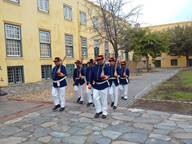
Guards at the Castle
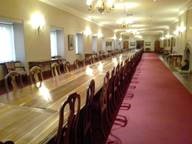
The Castle Dining Room
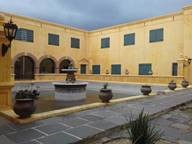
Lady Anne’s Bath
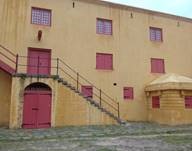
Ammunition Quarters
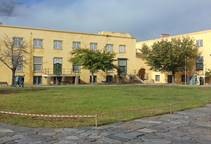
The Parade Grounds
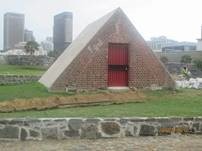
The Gun Powder Store
